VR Training Simulations: The Complete 2026 Guide for Enterprise Teams
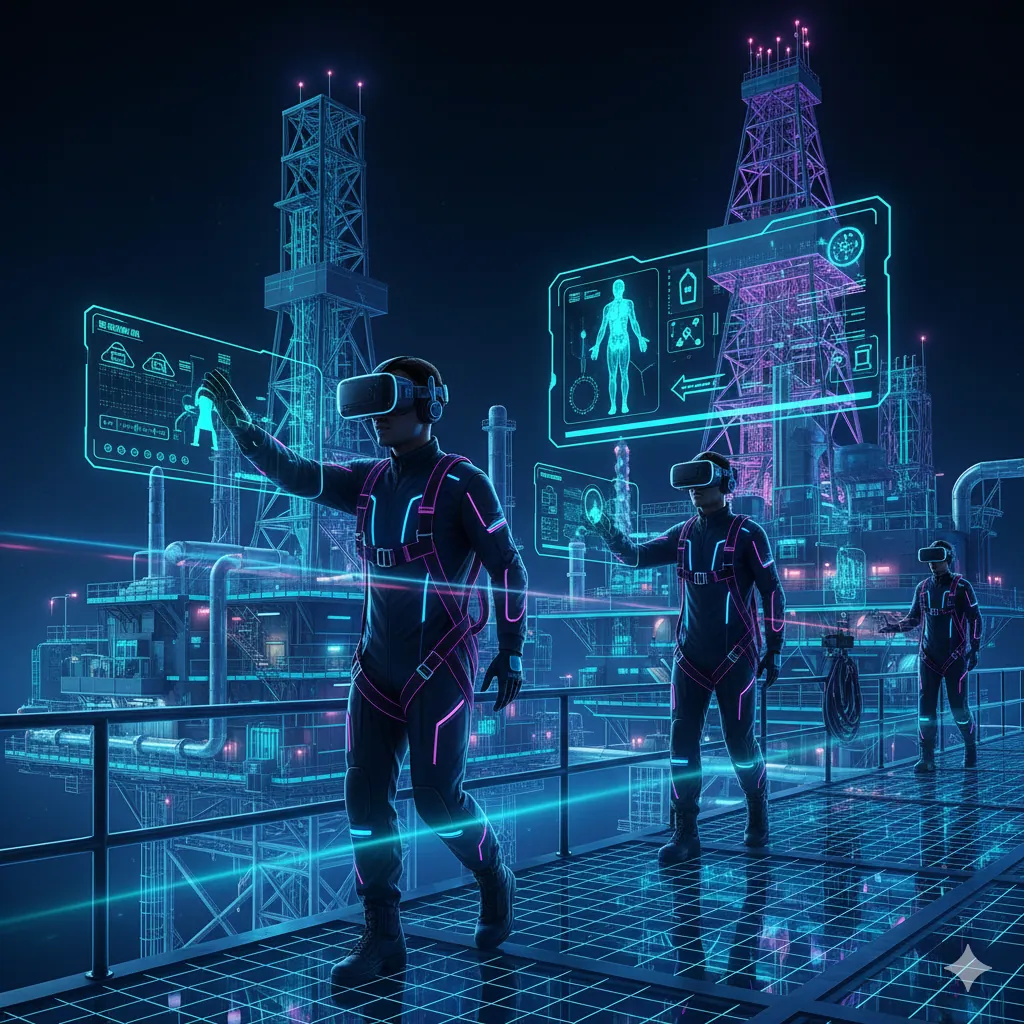
A VR training simulation is an interactive, three-dimensional learning environment that employees experience through a virtual reality headset, where they practise real tasks and procedures in a realistic but completely risk-free setting. Instead of reading a manual or watching a video, a trainee steps inside a virtual replica of their workplace - a factory floor, an operating theatre, an aircraft cabin, or an oil rig - and learns by doing. The simulation reacts to their actions, tracks their performance, and lets them repeat high-stakes scenarios as many times as needed, with no real-world cost or danger.
For enterprise teams, that combination - safe, repeatable, and measurable practice - is why VR training has moved from novelty to a serious learning tool. This guide explains how it works, why it outperforms traditional methods, which industries gain the most, and how to launch your first project.
Why does VR training work better than traditional methods?
Traditional training leans on classroom sessions, slideshows, and occasional hands-on practice that is often limited by cost, safety, or equipment availability. VR removes those limits. Because learners actively perform a task rather than passively watching, they build genuine procedural memory and tend to retain more of what they learn. The sense of "being there" - what researchers call presence - also sharpens focus: inside a headset there are no notifications or distractions pulling attention away.
Crucially, VR lets people make mistakes safely, which is where much of the deepest learning happens. A trainee can trigger an emergency, get it wrong, and try again - something that is impossible or far too dangerous in the real world.
VR training is also measurable. Every interaction can be logged: which steps a trainee completed, where they hesitated, and how they responded under pressure. That turns training from a checkbox exercise into data managers can act on.
Which industries benefit most from VR training?
VR training delivers the most value wherever real-world training is risky, costly, or simply hard to repeat at scale:
- Oil, gas, energy and railways - hazard recognition and emergency response without exposing trainees to real danger.
- Manufacturing - machine operation and maintenance practice without halting production lines.
- Healthcare - clinical procedures, sterile-field setup, and patient scenarios rehearsed safely.
- Aviation and transport - cockpit, vehicle, and equipment familiarization before touching the real thing.
- Enterprise onboarding - consistent, scalable training for large or distributed teams.
As a rule of thumb: if a mistake during training could cost lives, damage expensive equipment, or interrupt operations, VR is usually the right tool.
What makes an effective VR training simulation?
Not every VR experience is good training. The simulations that actually change behaviour share a few traits: a realistic environment that mirrors the real workplace, clear learning objectives tied to real competencies, immediate feedback the moment a trainee acts, and built-in assessment so progress can be proven. Comfort matters too - well-designed interactions and smooth performance keep learners engaged and prevent motion discomfort.
What does a VR training project involve?
A typical VR training simulation is built end-to-end and includes:
- A 3D recreation of the real environment and equipment.
- Scenario-based modules with branching outcomes and decision points.
- Real-time performance tracking and assessment.
- Multi-user support for team-based scenarios.
- Integration with your Learning Management System (LMS) for reporting.
- Deployment to standalone headsets such as Meta Quest 2/3 and Pico, or PC VR.
At Mox Mind Interactive we build these simulations in Unity and Unreal Engine, optimized to run smoothly on standalone hardware even when scenes are large and detailed. You can see real examples on our portfolio, including industrial safety, aviation, and medical training projects.
How much does VR training development cost?
There is no single price, because cost scales with scope: the size and detail of the 3D environment, the number of scenarios, whether you need multi-user or LMS integration, and the target hardware. A focused single-scenario module is far more affordable than a multi-environment programme with dozens of branching outcomes. The most reliable approach is to start with one high-value scenario, prove the results, and expand from there - which also keeps the initial investment low and de-risked.
How do you get started with VR training?
Pick a single, high-impact training problem - a procedure that is dangerous, expensive, or frequently done badly - and build a focused pilot around it. A well-chosen pilot shows measurable results quickly and makes the business case for a wider rollout, after which the same assets and pipeline can be reused across the organization.
If you are exploring VR training for your team, our VR development service covers the entire journey from concept to deployment. Get in touch for a free consultation and demo - we will help you identify the right first scenario and scope what it would take to build it.